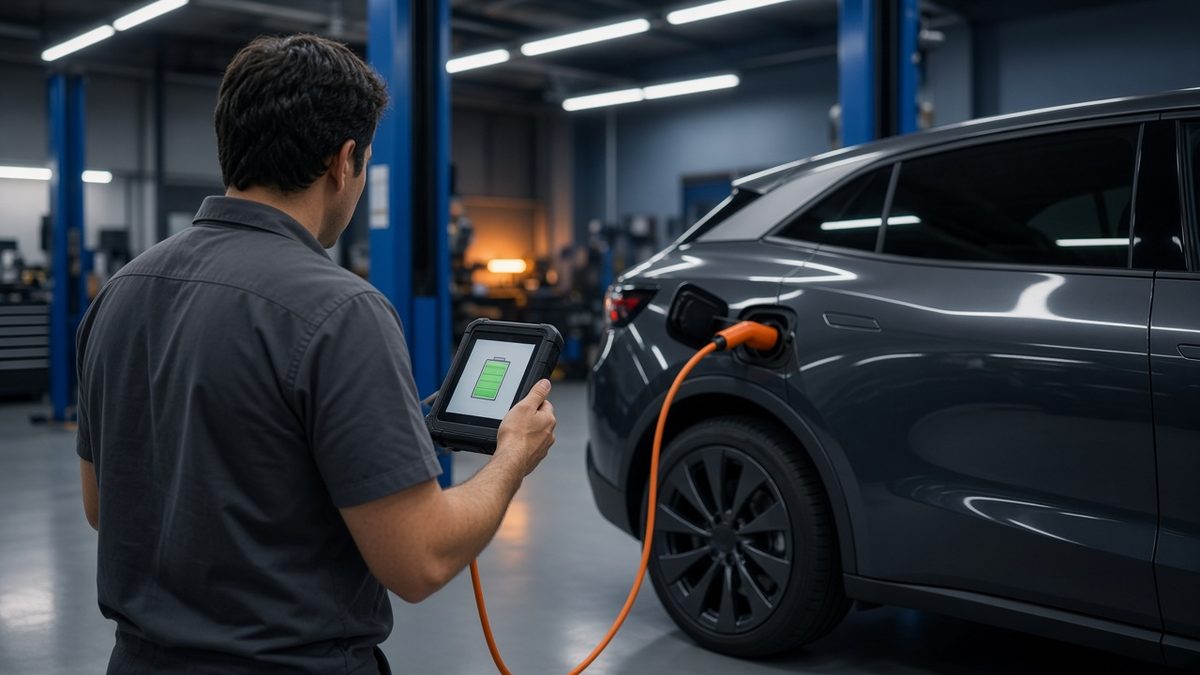
Volkswagen and Audi are telling owners of more than 31,000 electric SUVs to stop charging past 80% because of a battery fire risk. Neither brand has a permanent fix yet.
According to MotorBiscuit, the recall covers:
- 22,524 Volkswagen ID.4s from the 2023 to 2026 model years
- 7,040 Audi Q4 e-trons from the 2024 and 2025 model years
- 2,008 Audi Q4 Sportback e-trons from the 2024 and 2025 model years
The reports warn that "a state of charge above 80% may trigger thermal propagation within the high-voltage battery."
What we know, and what we don't
MotorBiscuit reports that both companies say they still don't know the root cause. They think only about 0.1% of the vehicles actually have the defect, but they can't tell yet which ones. VW says it knows of 22 claims of related incidents between January 2024 and August 2026. Audi says it isn't aware of any Q4 e-tron fires from this issue.
VW already pushed an over-the-air update that caps affected ID.4s at 80%. Audi hasn't forced a limit, so Q4 owners have to set it themselves. ID.4 owners should get letters by Nov. 27. The CarPro summary of NHTSA recall 26V698000 says the Audi remedy is "under development," and interim owner letters are expected around Dec. 18.
What it means in the bay
Right now this is a software cap and a sticker. But a recall with no root cause and no remedy is a warning to anyone who works on these vehicles: the real work hasn't landed yet. When it does, nobody outside VW and Audi knows if it'll be a reflash, a diagnostic routine, or high-voltage battery work. That's a lot of cars that could come back through service departments over a short stretch.
High-voltage work isn't like an oil change. It takes trained techs, the right PPE, and safety procedures you can't skip. When owners get nervous about a fire warning, the questions, the drop-ins, and the "can you just check it" visits land on the service drive, often before any remedy exists.
Pay plans start to matter here. Under flat rate, a recall pays whatever warranty time the manufacturer assigns. If the published time for the eventual fix is tight, or if checking a nervous customer's car doesn't come with a labor op, the tech eats the gap. With unknown root causes, early-stage procedures, and safety steps, EV recall work is exactly where clock time and paid time can drift apart.
Under hourly or hybrid pay, the trained EV tech is paid for the hours they actually spend doing high-voltage work safely. That's the incentive you want when the failure mode is a battery fire. Nobody should be paid to rush that job.
Know your numbers before the remedy drops
If you're the EV-certified tech in your shop, you're about to be busy. Before the campaign lands, figure out what warranty work actually pays you per clock hour. Run a typical week through the FlatRate.Live calculator, and read Flat Rate Pay Math if you want to see how slow-paying warranty work drags down an effective rate.
Recalls like this one are why we keep saying the same thing: the people with the training to work on high-voltage systems deserve a paycheck that doesn't depend on how generous a labor time turns out to be. Hourly or hybrid pay gets that right.
We'll update this story when VW and Audi announce a remedy.
Sources verified Nov 1, 2026: MotorBiscuit/Yahoo Autos (Oct 31, 2026 UTC) and CarPro weekly recall summary (NHTSA ID 26V698000).
Correction (Nov. 2, 2026): An earlier version of this article attributed a quoted warning to NHTSA filings. The quote comes from the reports cited in our source, and the attribution has been updated.